STORY
Dirk van der Kooij has been embracing unlikely materials, with process leading the way.
The studio generates values for 40T of waste plastic a year, shaping this problem material into its final form. Dirk van der Kooij uses design to break the waste cycle. By creating value and purpose for recycled plastic, he ensures that this problem material is preserved safely—and at scale. The studio is responsible for giving shape to over 40T of waste plastic a year.
More than a decade since the first Endless Chair, the Kooij collection has expanded to include lighting, tables, objects, and seating. Generating value for waste, be it through textural or practical applications, is the driving force behind many of the studio’s ongoing material investigations and design decisions.
WASTE REIMAGINED
"I was hoping to find a material to offset feelings of guilt about making—using waste material felt like a very logical answer."
There is no manual for working with recycled plastic. Without a clear path forward, Dirk was left to develop his own machines. Imperfect, improvised, and low-cost, these tools would shape the visual identity of the work that followed. Through creating a distinct language of machine, recycled plastic, too, would find a voice of its own.
Dirk's earliest experiments in recycled plastic started in 2008 with the Elephant Skin which was the result of cooling reheated material outside of a mould. The heating chamber comprised several pizza ovens welded together. Under these haphazard conditions, the material would wrinkle and contract spontaneously, creating a living tactility.
Yearning for additive processes, Dirk soon set about reconfiguring a robotic arm from the auto industry. Several electric shocks and a full year later, the Endless Chair was born of the world's first plastic extruding robot. A misaligned motor would impart a distinct scalloped patterning, gifting an endearing, faintly familiar texture to plastic.
INVENTING A ROBOT
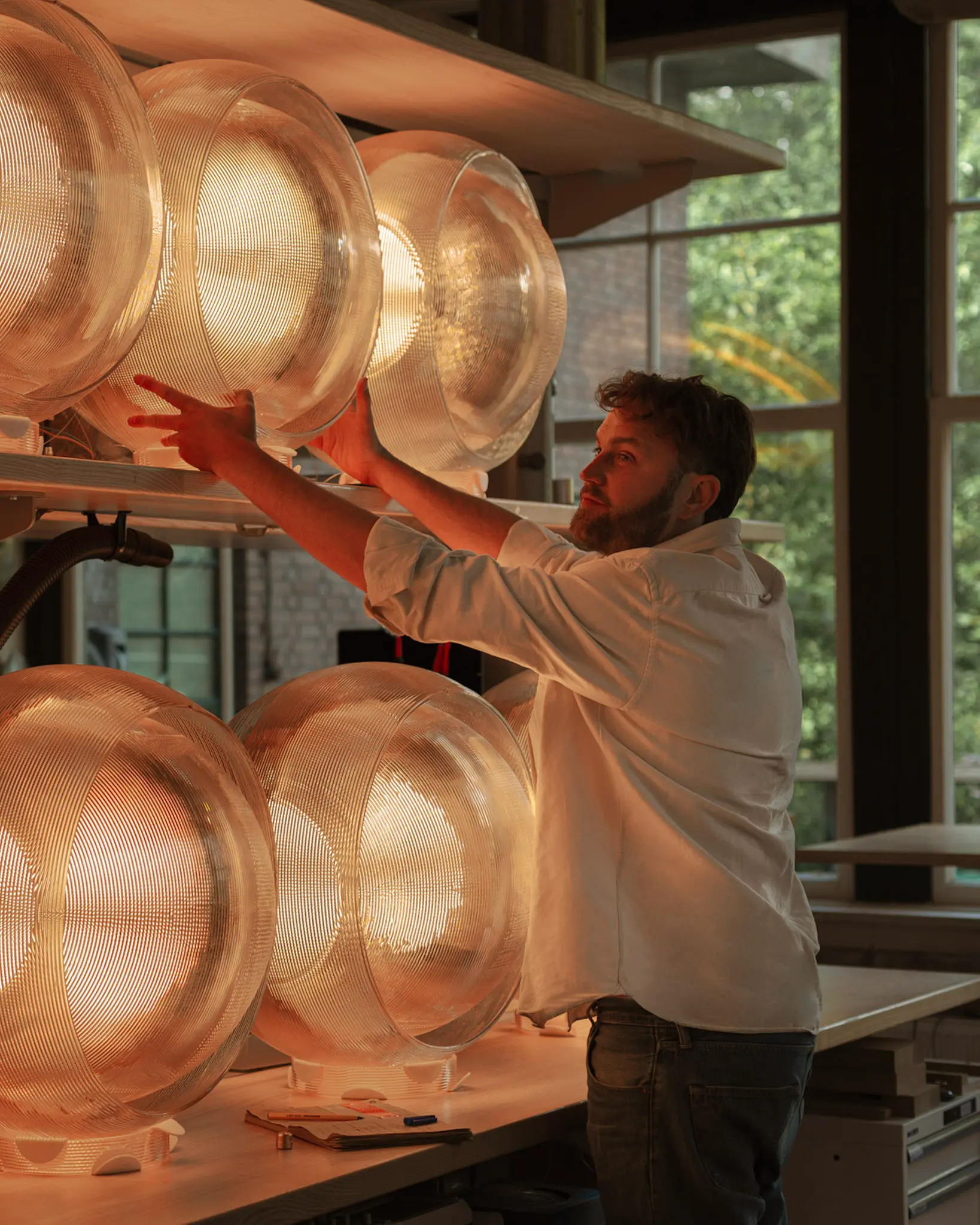
Dirk van der Kooij with the Helm pendant lamps in the Kooij studio.
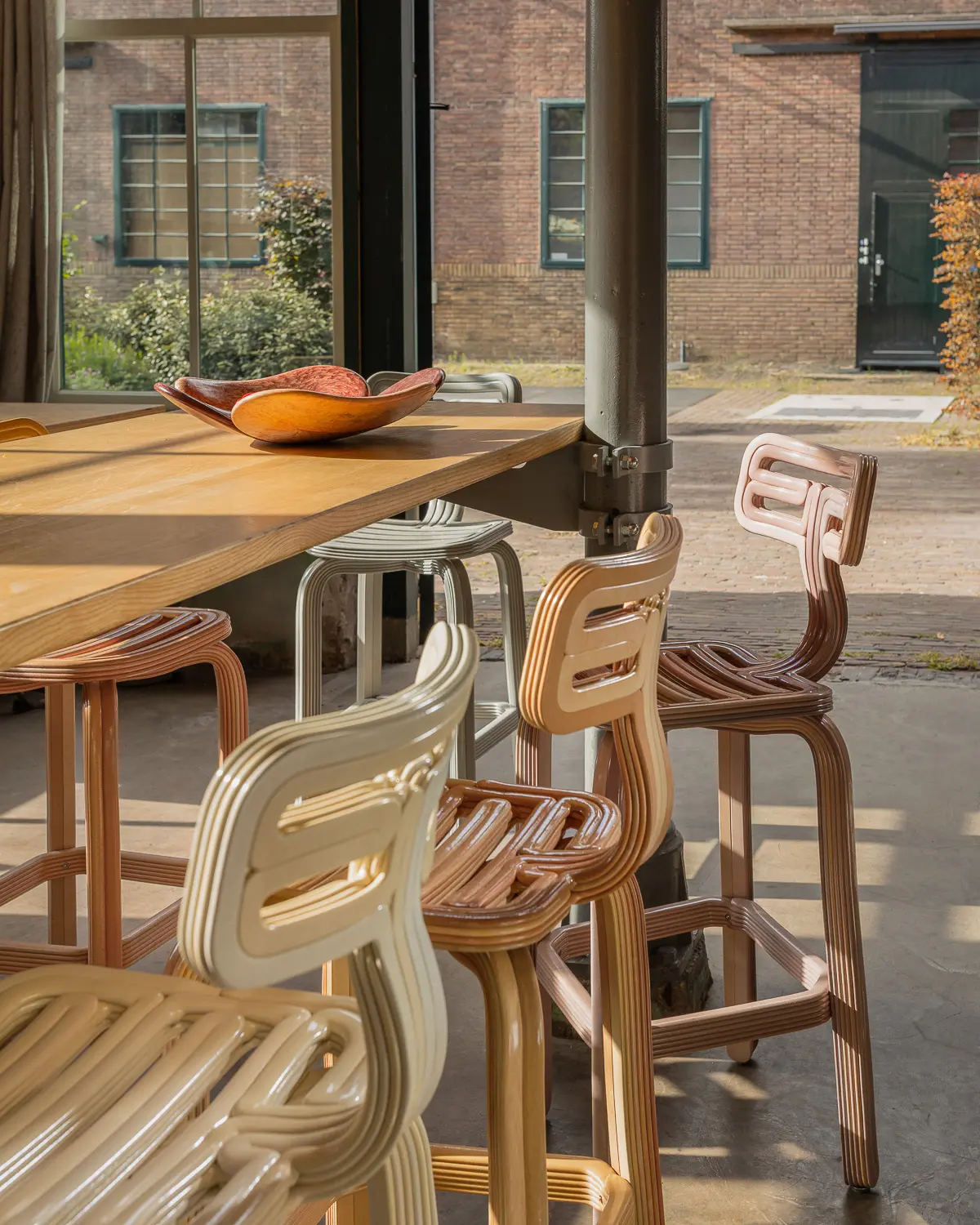
The 1920s ammunition warehouse, near Amsterdam, will become Kooij's new workshop & office.
The studio's collection continues to grow, and so does the thinking behind the process. In late 2025, Dirk designed a new chair (Row chair) and a new floor lamp (Accrete Lamp). He is also continuously refining the process itself, developing new ways to reuse the studio's own waste material. The upcoming move to a 1920s ammunition warehouse near Amsterdam will triple the size of the current studio and will open a next chapter, offering much-needed space for experimentation & machinery.
A NEW CHAPTER
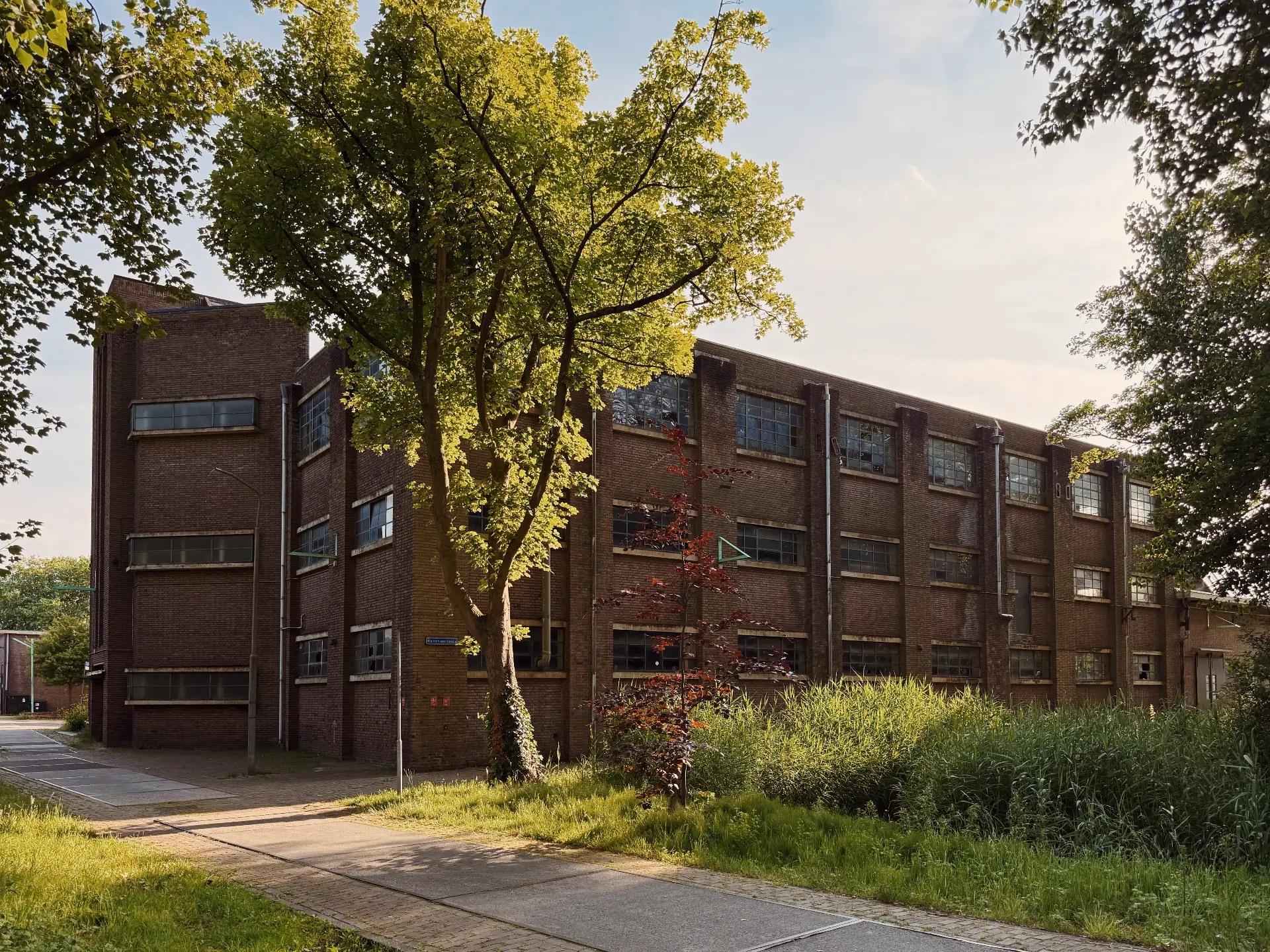
Dirk's Chubby bar chairs in the Kooij studio.
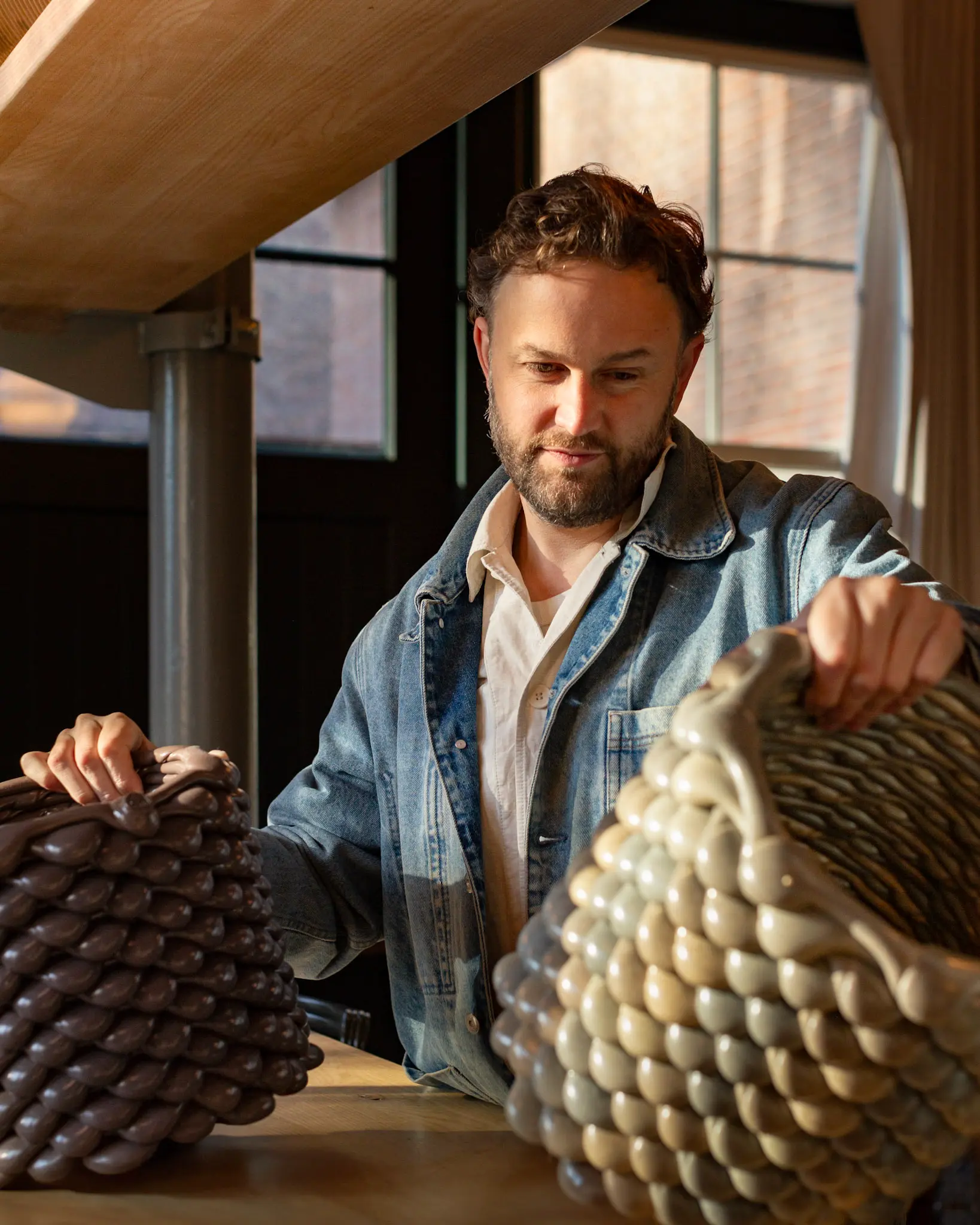
Dirk van der Kooij in the studio.
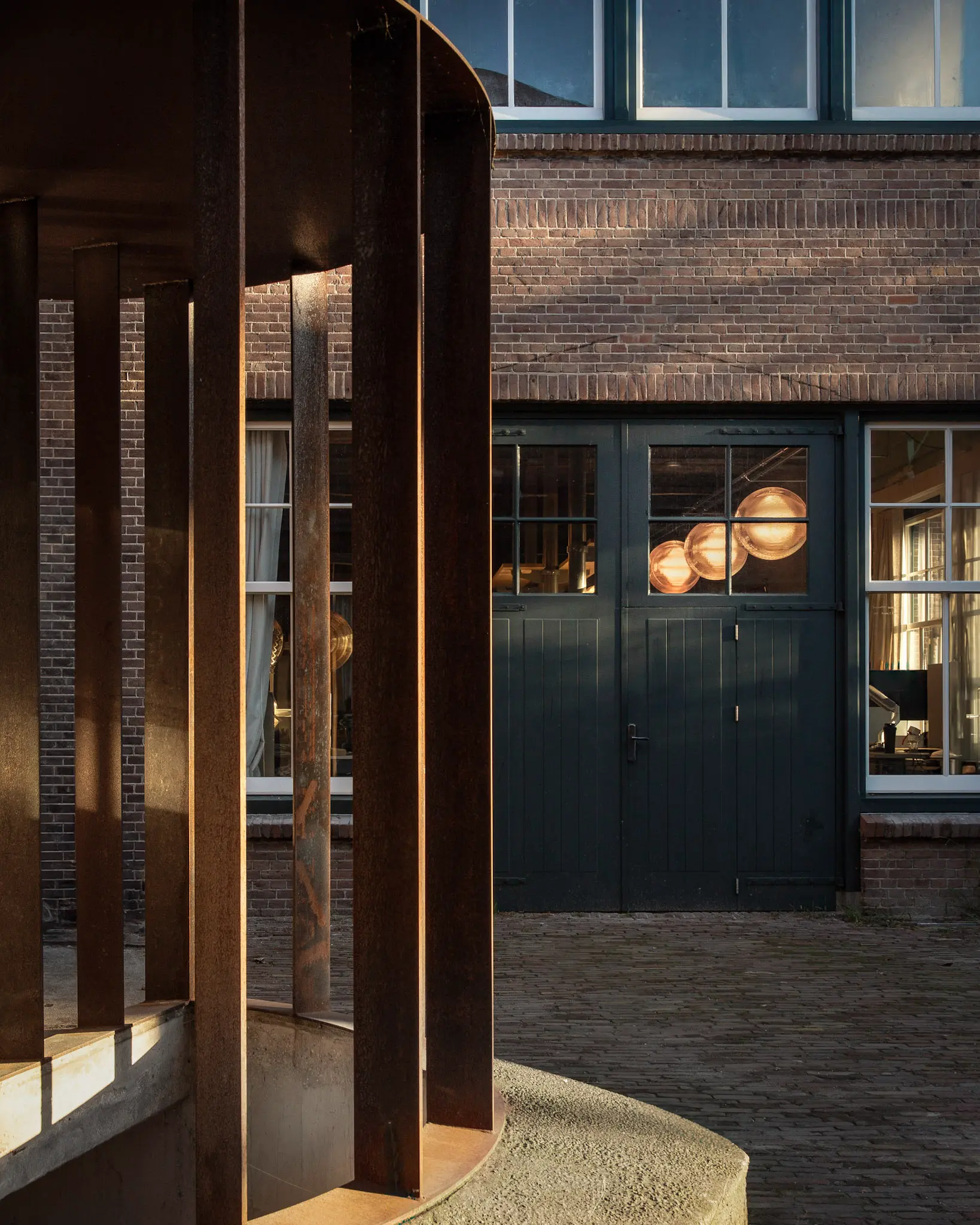
Kooij studio near Amsterdam, the Netherlands.
Dirk van der Kooij was a carpenter: as a young boy, he recalls sitting in church with his attention set on the wooden pews rather than the divine. At age 12, his father had directed this interest to a local woodworker, who patiently took on her young apprentice. Dirk would sell his creations to pay for tools; a chair sold, a chair made.
Amsterdam's beloved Wood & Furniture School further refined his passion, but also introduced an essential conflict. At the time, commercial woodworking relied heavily on chipboard and veneer. A materialist at heart, Dirk was compelled to continue his search for abundant (yet honest) material sources.
It was during his time at the Design Academy Eindhoven that Dirk first began to interrogate recycled plastic. Could this waste material fulfil his yearning for a solid, expressive, sustainable alternative to wood?